
Components & reference points
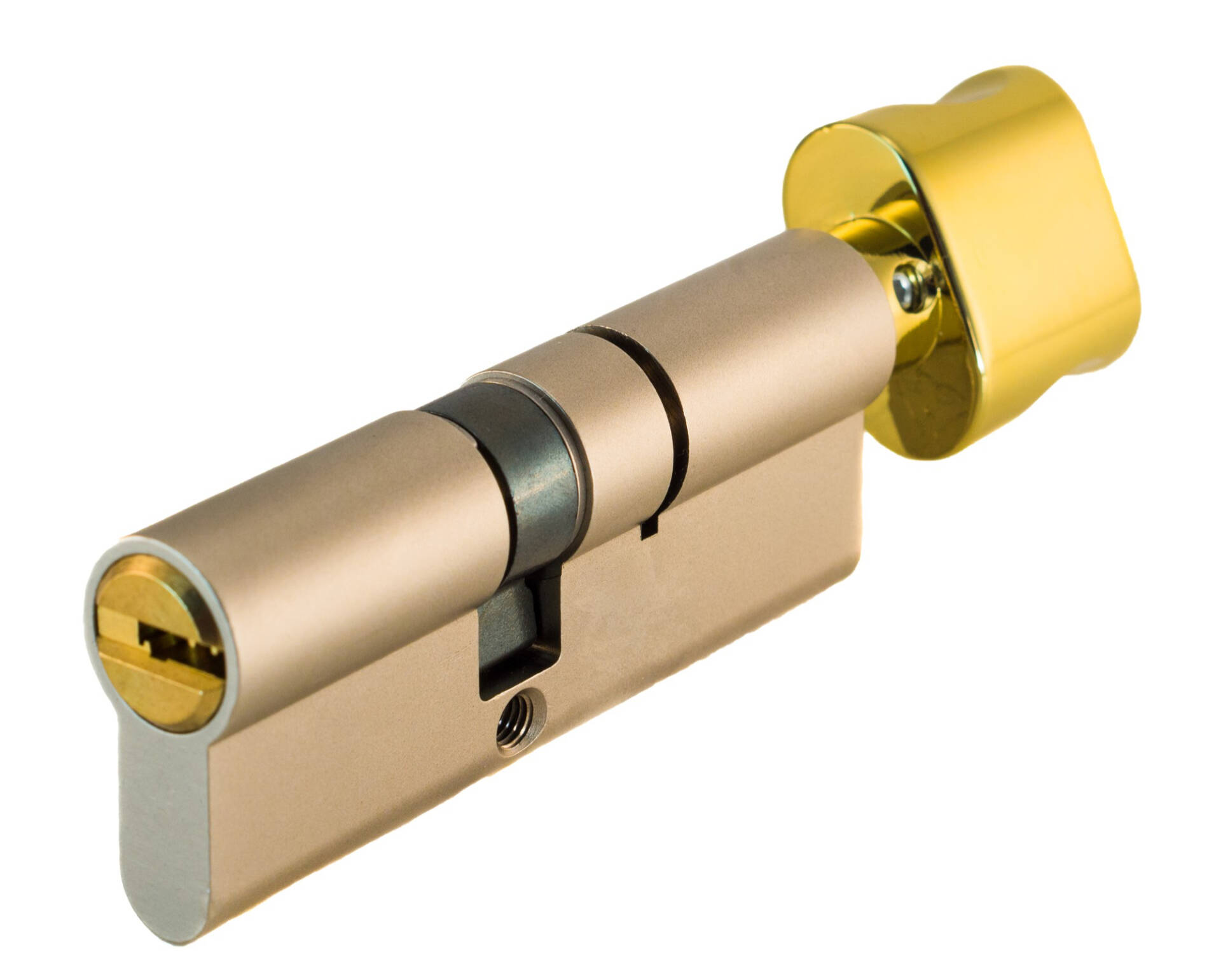
The lock cylinder, or barrel
The cylinder is the part of the lock that receives the key and enables its operation on the mechanism. It is often replaceable independently of the safe, allowing, for example, key changes without replacing the entire lock.
THE KEY POINT TO REMEMBER
Profile, dimensions, operation, and function: these four criteria must be compatible with the door.
Understanding its operation
A mechanical cylinder consists of a fixed part, the stator, and a rotating part, the rotor. When the correct key is recognised, rotation is transmitted to the mechanism via a cam or appropriate drive.
Many systems use pins, but other technologies exist. Pump cylinders and specific systems require precise identification: they are not interchangeable with any European model.
Main configurations
A double cylinder takes a key on each side. A button cylinder allows operation without a key from the interior side. A half-cylinder has only one operating side.
Engageable functions, key withdrawal positions, and usage on an organisational chart vary by reference. It is essential to select what matches user requirements and expected operation.
Security and key replication
Security depends on cylinder design, but also on its length and door furniture. Excessive protrusion on the exterior side may expose the structure to greater physical attacks.
For a certified lock, replacement references must adhere to the approved configuration. Some systems, such as EVVA ICS, include controlled key reproduction: dual keys must pass through the manufacturer's defined circuit and documentation.
Selection, maintenance, and replacement
Note the profile, the lengths on each side from the mounting point, the type of cam, and the desired function. Also plan for the number of keys and access points that may share a single key.
A key that won't fit or turns difficult may indicate wear, dirt, or a mounting issue. A key that turns in the void does not necessarily mean the bolt is faulty. Avoid forcing and have the cause identified before replacement.
IN IMAGES

MULTISECU ADVICE
Uncertain about your lock?
A photo of the mechanism, along with some details about your door: we help you identify the right solution.