
Components & reference points
The wafers in the cylinder
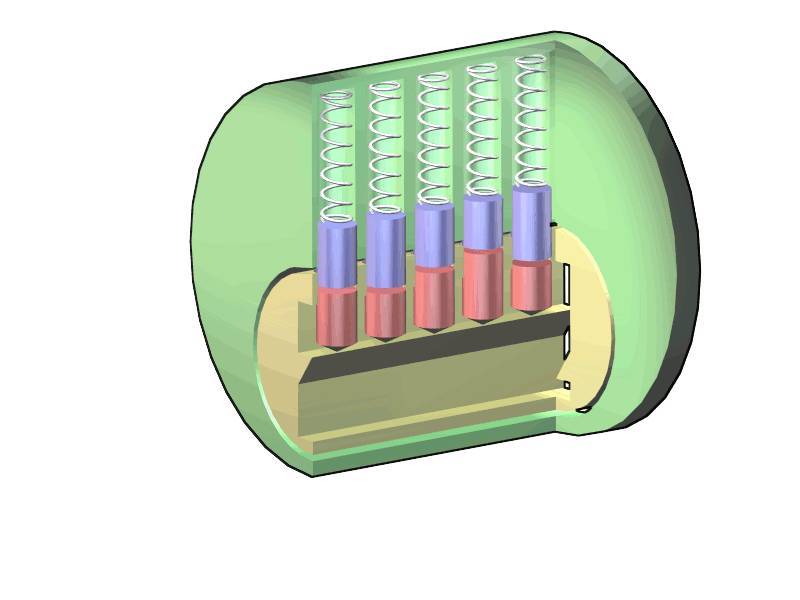
The wafers are small movable components found in many cylinders. They contribute to key recognition and allow rotor rotation when correctly positioned.
THE KEY POINT TO REMEMBER
They operate within the cylinder. They do not directly block the bolt of the lock.
The role of the key
In a classic pin-and-tumbler system, the correct key cuts the elements to their position allowing rotation. A different key leaves the mechanism jammed.
The rotor then drives the lock via the cam. Springs, pins, and counter-pins contribute to cylinder operation, while the bolts belong to the locking mechanism.
Wafers and counter-wafers
We distinguish between components in contact with the key and those associated within the cylinder chambers. A counter-pin is not, by definition, a special anti-pick component.
Special shapes and other devices may complicate manipulation. The number, layout, and design of components vary depending on the system.
Their role in security
Counting pins is insufficient to classify two cylinders. Protection against drilling, pulling, or breaking, key management, and door mounting must also be considered.
Other key recognition technologies exist, including disc and specific control element systems. Therefore, not all locks operate with the same pins.
Wear and maintenance
A worn key, a sticky cylinder, or a failing internal component may prevent smooth rotation. Do not add oil or grease randomly: use the recommended product for the system.
Replacing small internal parts requires the correct reference and method. For the user, a diagnosis determines whether a targeted intervention is appropriate or whether the cylinder should be replaced.
MULTISECU ADVICE
Uncertain about your lock?
A photo of the mechanism, along with some details about your door: we help you identify the right solution.