
Types of locks
A handle follower lock
In a handle-operated lock, the square spindle fits into a rotating follower in the lock case. Pressing the lever normally turns the follower and retracts the latch bolt.
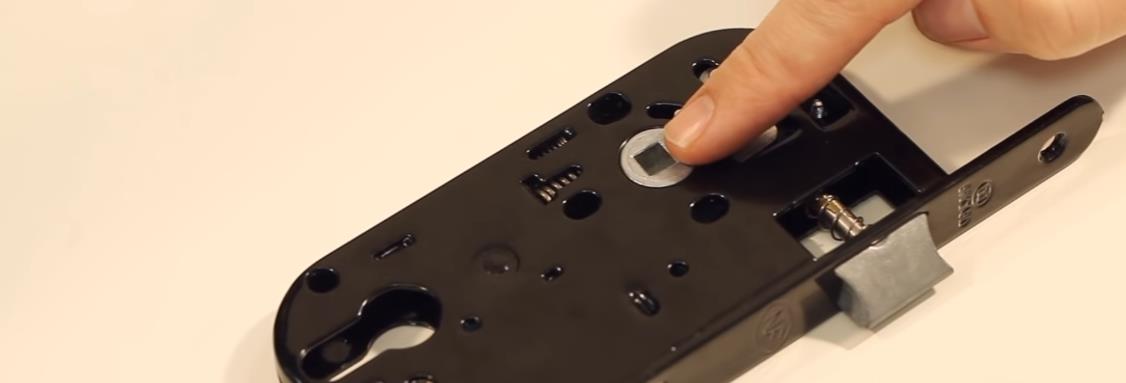
THE KEY POINT TO REMEMBER
The handle follower is the part that receives the square. The square is the shaft that connects the handles: these are two distinct components.
From the handle to the latch bolt
The lever handle drives the square, which rotates the handle follower inside the lock. The mechanism converts this movement into the retraction of the bolt to release the door.
On a lock with a cylinder, the key-operated function may act independently on the deadbolt. The exact functions vary, particularly on lifting or evacuation locks.
One operation, multiple types of installation
The handle follower option is available for both mortice and surface-mounted locks, including those with casing. The term describes the handle mechanism, not the method of mounting the lock case.
A pull-operated lock uses a different control to retract the latch bolt. The choice depends on the lock, how the door is used and the preferred door furniture.
The advantages and limitations
The handle facilitates repeated openings and allows for different finishes to be selected. The mechanism must, however, match the square and the expected forces for the door furniture.
A lock operated by a handle spindle is not inherently more or less secure than another type. For an entrance door, we assess the whole installation, cylinder, strikes and any certification.
Handle that drops or loses alignment
A spindle that is too short, a loose fixing, a handle return spring or a spring inside the lock case may be responsible. A loose handle does not necessarily mean the complete lock needs replacing.
Measure the spindle size, backset and centres before choosing a part. A targeted repair may be possible if suitable components are available. Adjustment and testing then confirm that the handle returns and operates correctly.
IN IMAGES
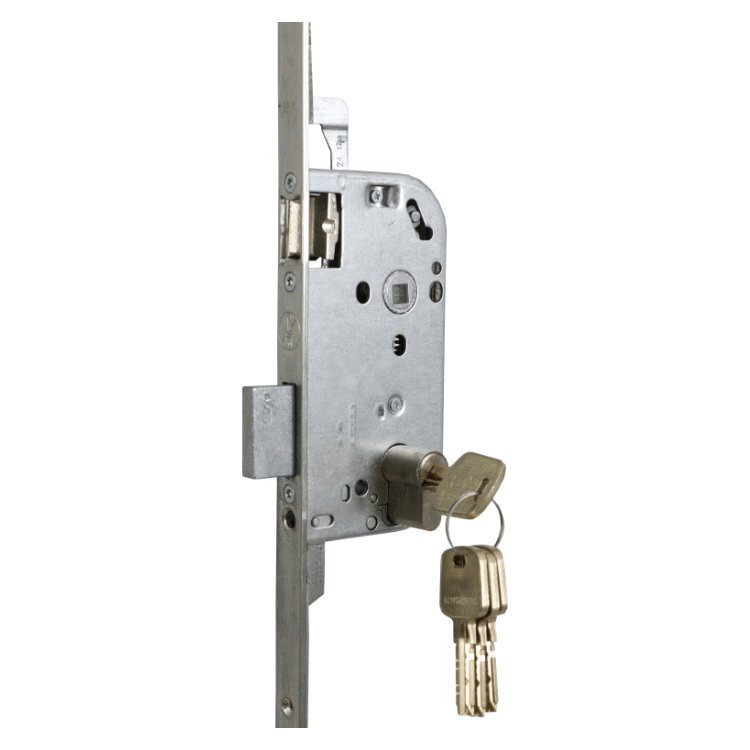
MULTISECU ADVICE
Uncertain about your lock?
A photo of the mechanism, along with some details about your door: we help you identify the right solution.